Updated: May 2026
How to Choose a Reputable Luxury Komodo Dive Safari Operator
- Vessel Pedigree: The boat’s age, refurbishment date, and onboard technical capabilities like Nitrox membrane systems.
- Crew Experience: The dive guides’ specific Komodo tenure (ideally 5+ years) and the captain’s navigational record in these challenging waters.
- Operational Transparency: Clear, all-inclusive pricing that covers park fees, port charges, and demonstrates a firm commitment to environmental protocols.
The pre-dawn air is thick with the scent of salt and damp teak. From the sundeck of a phinisi schooner, the silhouettes of Komodo’s iconic dragon-backed islands are just beginning to separate from the inky sea and sky. Below deck, a silent-running generator hums, chilling the day’s fresh produce while the dive compressors are prepped. This is the serene overture to a day of immense adventure in one of the planet’s most dynamic marine ecosystems. Yet, this tranquility, this seamless blend of raw nature and refined comfort, is not an accident. It is the direct result of a meticulous decision you made months ago: choosing the right luxury komodo dive safari operator. The difference between a good trip and a life-altering expedition lies entirely within this choice.
Beyond the Brochure: Scrutinizing the Vessel and its Specifications
In the world of Indonesian liveaboards, the vessel is more than mere transport; it is your sanctuary, your dive platform, and your window to the wild. The term ‘luxury’ is often overused, so discerning travelers must learn to read between the lines of a marketing deck. A true luxury vessel in Komodo is typically a modern phinisi, a traditional Indonesian two-masted sailing ship, but one built or fully refurbished within the last 5-7 years. The hull material, often ironwood (kayu uli) for durability, and the superstructure, usually teak, speak to its quality. Look for specifics on length; premier vessels often measure between 35 and 50 meters, providing ample space for a limited number of guests. A key indicator of comfort is the guest-to-space ratio. An operator offering 8 cabins on a 45-meter boat provides a vastly different experience than one cramming 12 cabins onto a similar frame. I always advise our readers to ask for the gross tonnage, as it gives a better sense of volume than length alone. Onboard amenities are the next layer of assessment. A dedicated, climate-controlled camera room with multiple charging stations is non-negotiable for photographers. Continuous-flow Nitrox membrane systems are standard on high-end boats, as are multiple, powerful desalination units capable of producing over 6,000 liters of fresh water daily. The dive tenders, or ‘duckies’, should be spacious fiberglass boats with sturdy ladders, not inflatable Zodiacs that are difficult to re-board in a swell.
The Heart of the Operation: Evaluating Dive Guides and Crew Expertise
You can be on the most opulent phinisi in the archipelago, but without a world-class crew, the experience will fall flat. The single most critical element of any dive safari is the quality of your guides. A PADI Divemaster certification is the bare minimum; what you are looking for is deep, specific, and long-term Komodo experience. A truly elite guide has not just dived these sites—they understand the esoteric language of the currents. They know that the window for shooting the channel at ‘The Cauldron’ on a falling tide is a mere 20 minutes, and they can position you perfectly. I once spoke with a cruise director for a top-tier operator who explained that their lead guides have an average of 8,000 dives logged *within Komodo National Park alone*. This level of experience is what separates a routine dive at Batu Bolong from an orchestrated ballet with schooling fusiliers and hunting giant trevallies. The ideal guide-to-diver ratio on a luxury trip is 4:1, and some operators even offer private guiding. Beyond the dive team, evaluate the entire crew. A seasoned captain who has navigated these channels for over a decade is invaluable. The total crew-to-guest ratio is another metric; a 1:1 ratio (e.g., 14 crew for 14 guests) is a strong indicator of attentive service, from the engineers who keep everything running smoothly to the chef who can cater to complex dietary needs hundreds of miles from the nearest port. This is a key part of any premium komodo diving package.
Deciphering the Itinerary: A Route is More Than Just a List of Sites
A thoughtfully crafted itinerary is a hallmark of a premier luxury komodo dive safari operator. Many operators follow a standard “greatest hits” route, which can lead to crowded dive sites. A superior operator curates their journey based on lunar cycles, tides, and prevailing conditions, often visiting world-class sites at unconventional times to avoid the crowds. A 7-night trip is the minimum to scratch the surface, but 10 or 11 nights allows for a more comprehensive exploration of the park’s three distinct regions. A classic central and north Komodo route will feature marquee sites like Castle Rock and Crystal Rock, but a top operator will also include lesser-known gems. A southern route, accessible only during certain seasons (typically December to March), offers a completely different environment with cooler waters, vibrant soft corals, and different macro life. The key is flexibility. A reputable operator will have a planned route but will not be slavishly bound to it. If a site is blown out by current or another boat is already there, they will have excellent alternative plans. This adaptive approach is a luxury in itself. Furthermore, the surface intervals should be as compelling as the dives. Does the operator include guided treks on Rinca or Komodo islands with official park rangers for dragon encounters? Do they arrange for a sunset cocktail hour on a deserted pink beach? These thoughtful additions elevate the entire expedition beyond a simple series of dives and are a crucial part of a complete Komodo dive package.
Safety Protocols and Environmental Stewardship: The Non-Negotiables
In a remote environment like Komodo, safety is the ultimate luxury. A responsible operator will be completely transparent about their emergency preparedness. Inquire about their standard operating procedures. Do they carry comprehensive DAN-standard oxygen kits with demand valves and non-rebreather masks? Is there an Automated External Defibrillator (AED) on board? Satellite phones and Emergency Position Indicating Radio Beacons (EPIRBs) are absolute essentials. Ask for the vessel’s last dry-dock date and safety certification. A well-maintained engine room and organized dive deck are often visible indicators of a culture of safety. Equally important is the operator’s commitment to environmental stewardship. The Komodo National Park is a UNESCO World Heritage Site, a fragile treasure that demands respect. A top-tier operator will enforce strict no-touch, no-glove policies and provide reef-safe sunscreen for all guests. They will have advanced waste management systems on board, ensuring nothing is discharged into the park’s waters. They actively participate in conservation initiatives, such as coral monitoring or manta ray identification programs. Choosing an operator who is a guardian of the environment ensures that these pristine ecosystems, home to over 1,000 species of fish and 260 species of coral, remain vibrant for generations to come. This commitment is a core value, not a marketing bullet point, for the best in the business.
The Price Tag Demystified: What Are You Actually Paying For?
Luxury in Komodo comes at a premium, and it’s essential to understand the value behind the price. Nightly rates for a high-end liveaboard can range from $700 to over $1,500 USD per person, which can seem steep compared to budget options in the $250-$400 range. However, the inclusions are vastly different. A reputable operator’s pricing is typically all-inclusive. This means the daily Komodo National Park and conservation fees, which can amount to over $175 per person for a 7-day trip, are covered. Port clearance fees, fuel surcharges, and all meals and non-alcoholic beverages are also included. Critically, unlimited Nitrox is almost always complimentary on luxury vessels, a significant cost-add on budget boats. High-quality rental gear, if needed, is often included as well. The higher price tag directly funds the superior elements we’ve discussed: a better-maintained vessel, a more experienced and larger crew, higher quality provisions and chef expertise, and robust safety infrastructure. You are paying for peace of mind, for personalized service, for access to deeper local knowledge, and for the assurance that every detail has been considered. When comparing options, create a spreadsheet and normalize the costs by adding in the potential extras on the cheaper boat—you may find the value gap narrows considerably. A well-structured Komodo diving package from a trusted source will have this transparency built in.
Quick FAQ for the Discerning Diver
Q: What is the absolute best time of year to dive Komodo?
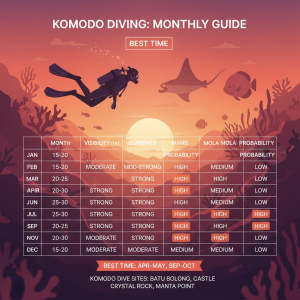
A: It depends on your priorities. For the calmest seas, best visibility, and warmest water, the dry season from April to November is ideal. However, the peak season for manta ray aggregations in the south is often from December to March, though conditions can be more unpredictable.
Q: What dive certification level is required for a Komodo liveaboard?
A: An Advanced Open Water certification with a minimum of 50 logged dives is the standard requirement for most reputable operators. The currents can be formidable, and confidence in drift diving is essential. A Nitrox certification is also highly recommended to maximize bottom time and reduce fatigue over 3-4 dives per day.
Q: How can I verify an operator’s reputation beyond their website?
A: Look for recent, detailed reviews on specialized dive travel forums like ScubaBoard or Wetpixel. Ask the operator for references from recent guests and actually contact them. Check their social media for recent trip reports, which demonstrates they are actively running trips. Cross-reference their vessel against official listings on the Indonesian tourism board, indonesia.travel, for legitimacy.
Q: Is a full-boat private charter a better option?
A: For families or groups of 8 or more, a private charter is the pinnacle of luxury. It offers complete control over the itinerary, dive times, and daily schedule. You can spend an entire day at a favorite site or focus exclusively on photography. Be prepared to book these charters 18-24 months in advance, especially for popular vessels during peak season.
Choosing your luxury komodo dive safari operator is the most consequential decision you will make in planning this expedition of a lifetime. It is an investment not just in a vacation, but in safety, comfort, and unparalleled access to one of Earth’s last great wild places. It requires due diligence and a clear understanding of what defines true quality in this remote corner of the world. For a curated selection of vessels that meet these exacting standards, we invite you to explore our portfolio of komodo diving package options. Let our expertise guide your choice, and start planning your definitive Indonesian dive safari with Komodo Divingpackage Atlas today.